Lumbar Spinal Stenosis (Narrowing of the Spinal Canal)
Lumbar Spinal Stenosis is a gradual narrowing of the spinal canal in the lower back, compressing the nerves and causing pain, heaviness, or cramping in the legs when walking or standing.
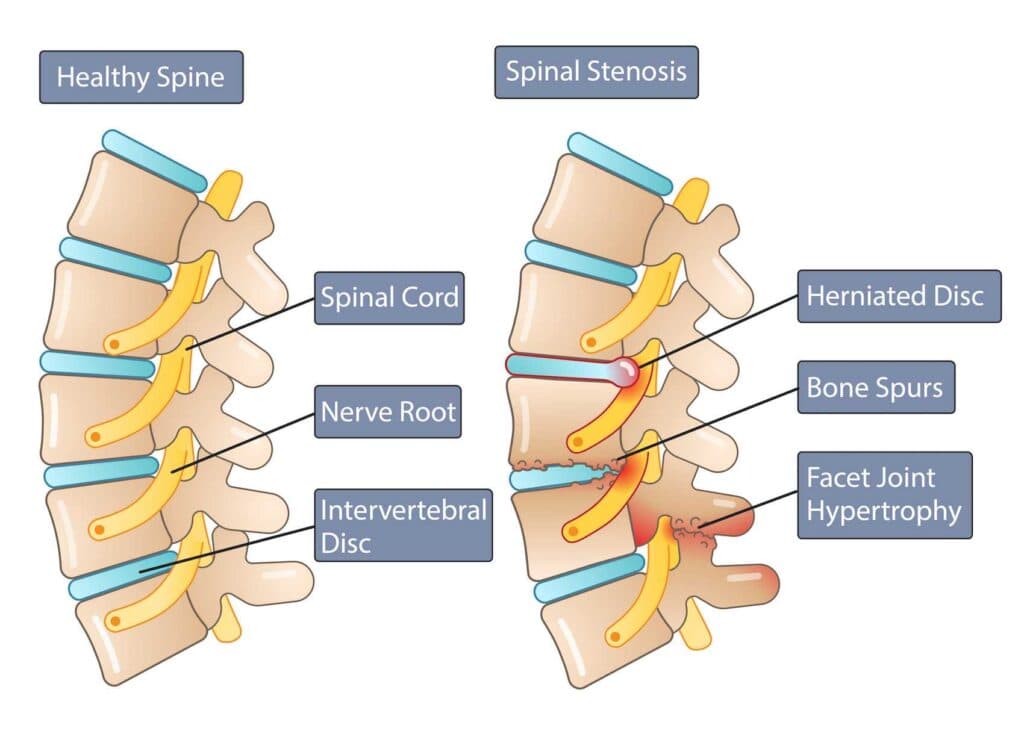
Lumbar spinal stenosis is a condition in which the space inside the lower spine becomes narrow and compresses the nerves that travel to the legs. It commonly affects people above 50 years of age and is one of the most frequent causes of difficulty walking in older adults.
Many patients believe they have a “knee problem” or “circulation issue,” but the actual cause is often pressure on the spinal nerves in the lower back.
Typical Symptoms
The most characteristic symptom is pain or heaviness in the legs while walking.
You may notice:
- Pain in buttocks or thighs while walking
- Leg heaviness or fatigue after short distances
- Numbness or tingling in legs
- Burning sensation in calves
- Relief after sitting or bending forward
- Need to stop frequently while walking
- Leaning forward while walking (shopping cart sign)
Important clue:
Patients can usually walk longer distances while bending forward (for example, pushing a shopping cart or walking uphill).
Why Does It Happen?
As we age, the spine undergoes wear and tear changes.
Common causes include:
- Disc degeneration
- Thickening of ligaments
- Bone spur formation
- Arthritic facet joints
- Vertebral slippage (spondylolisthesis)
All these changes reduce the space available for the nerves, leading to compression.
How It Is Diagnosed
Diagnosis is based on:
- Clinical examination
- Walking assessment
- X-rays
- MRI scan (most important)
MRI helps confirm the level and severity of nerve compression.
Non-Surgical Treatment
In early or mild cases, symptoms can be managed with:
- Medications
- Physiotherapy
- Activity modification
- Back strengthening exercises
- Weight management
However, stenosis is a structural narrowing, so symptoms may gradually progress over time.
When Is Surgery Required?
Surgery is recommended if:
- Walking distance becomes very limited
- Severe leg pain persists
- Progressive numbness or weakness
- Frequent falls
- Symptoms affect daily independence
- No improvement with proper conservative treatment
The purpose of surgery is to create more space for the nerves (decompression).
Modern minimally invasive decompression techniques allow:
- Small incisions
- Less blood loss
- Early walking (often next day)
- Short hospital stay
Many patients experience significant improvement in walking ability after surgery.
What Happens If Ignored?
Delaying treatment may lead to:
- Progressive nerve damage
- Persistent numbness
- Weakness in legs
- Loss of balance
- Reduced independence in elderly patients
Early treatment helps preserve mobility and quality of life.
When to Consult a Spine Specialist
Consult if you notice:
- Leg pain while walking
- Need to sit frequently during walks
- Numbness in both legs
- Walking distance decreasing over time
- Relief on sitting but pain returns on standing
Have questions about this condition?
Consult Dr. Sajan Hegde, a pioneer in spine surgery and complex deformity correction.