Disc Nucleoplasty (Percutaneous Disc Decompression)
A minimally invasive percutaneous procedure utilizing coblation technology to decompress herniated discs and relieve discogenic back or leg pain.
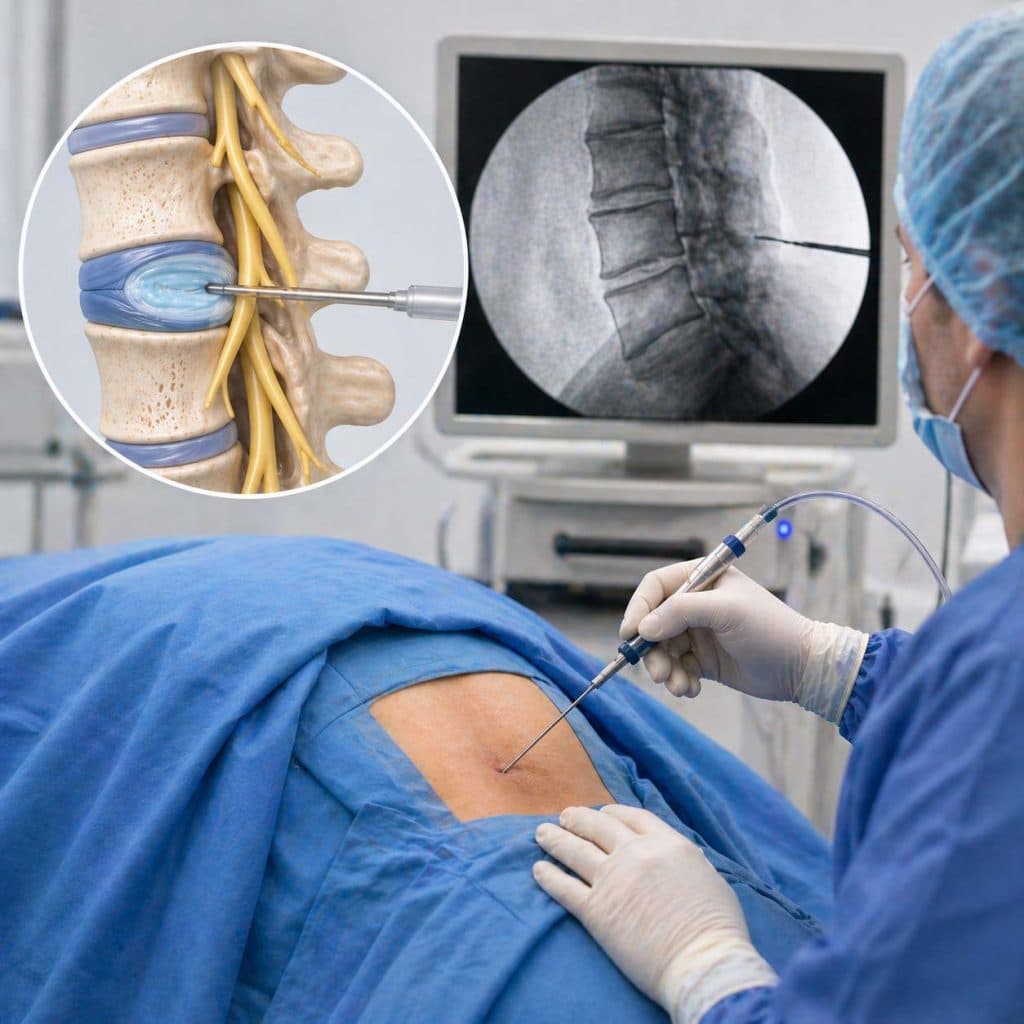
Disc Nucleoplasty is a modern, minimally invasive procedure used to treat selected cases of slipped disc causing leg pain (sciatica) or arm pain. It is designed for patients who continue to have nerve pain despite medications and physiotherapy, but who may not yet require major spine surgery.
The procedure reduces pressure inside the disc and relieves irritation on the spinal nerve, helping patients return to normal activities faster.
When Is Disc Nucleoplasty Recommended?
Disc nucleoplasty is useful in patients with a contained disc bulge (early stage slip disc) where the disc has not completely ruptured.
It may be advised if you have:
- Sciatica (pain radiating to leg)
- Arm pain due to cervical disc bulge
- Persistent pain not improving after 4–6 weeks of treatment
- Difficulty sitting for long periods
- MRI showing disc bulge without severe nerve damage
It is usually not required in large disc prolapse or severe nerve compression.
How the Procedure Works
Inside every spinal disc is a soft material called the nucleus. When pressure builds up inside the disc, it bulges outward and irritates the nerve.
Disc nucleoplasty works by gently removing a very small portion of this inner material using a special probe. This decreases the internal disc pressure, allowing the bulge to shrink and the nerve to relax.
Procedure Details
- Performed under local anesthesia
- No large incision (needle-sized entry)
- No stitches required
- Usually completed within 30–45 minutes
- Minimal blood loss
- Most patients go home the same day
Because muscles and bones are not cut, recovery is much faster than conventional surgery.
Advantages of Disc Nucleoplasty
- Minimally invasive procedure
- Day-care treatment
- Less pain after procedure
- Quick return to routine activities
- Avoids major surgery in selected patients
- Short recovery time
Patients are typically able to walk within a few hours and resume light activities within a few days.
Recovery After the Procedure
After nucleoplasty:
- Walking is encouraged the same day
- Light work can begin within a few days
- Heavy lifting should be avoided for a few weeks
- Physiotherapy and posture correction are important for long-term relief
The goal is not only pain relief but also preventing recurrence.
Expertise Matters
Proper patient selection is the key to success in disc nucleoplasty. Not every slip disc is suitable for this procedure. Careful evaluation of symptoms, examination findings, and MRI imaging is essential before recommending it.
Dr. Sajan K. Hegde, an internationally recognized spine surgeon, is experienced in minimally invasive spine procedures and advanced decision-making in spine care. He carefully evaluates whether a patient can benefit from nucleoplasty or requires another form of treatment, ensuring safe and appropriate management.
Key Takeaway
Disc nucleoplasty offers an effective middle option between conservative treatment and major spine surgery. When performed in the right patient, it can significantly reduce nerve pain and help avoid open surgery while allowing early return to normal life.
If leg or arm pain from a disc problem is persistent but surgery has not yet been advised, a specialist evaluation can determine whether this minimally invasive procedure is suitable.
Considering this treatment?
Discuss your options with Dr. Sajan Hegde, a pioneer in advanced spine procedures.